
CRS was low grade, predictable, and resolved1,2
In patients with FL who received EPKINLY + R2 at the recommended 3-step up dosage schedule (n=131) in EPCORE® FL-1
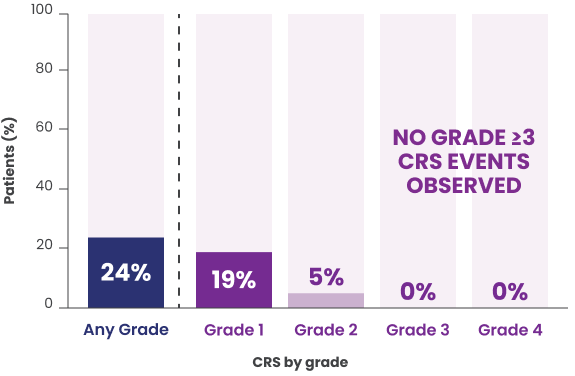
- In a pooled analysis of LBCL and FL patients, 98% of CRS events were resolved; median duration of CRS events was 2 days (range: <1 to 27 days)
- In a follow-up analysis with a median time of 14.8 months, 100% of CRS events resolved1,2
- Serious adverse reactions due to CRS occurred in 12% of patients; recurrent CRS occurred in 41% of patients1
- Most CRS events (88%) occurred during cycle 11
- In cycle 1, 5% occurred after the 0.16-mg dose (day 1), 3.8% after the 0.8-mg dose (day 8), 2.3% after the 3-mg dose (day 15), and 18% after the 48-mg dose (day 22)
- CRS symptoms that presented were fever (94%), hypotension (17%), and hypoxia (6%)3
- The median time to onset of CRS from the most recent EPKINLY dose was 78 hours (range: 0.2 to 12 days)1
- The median time to onset after the first 48-mg dose was 41 hours (range: 0.3 to 12 days)1
Management of CRS may require supportive therapy, which may include intensive care as appropriate. Withhold or discontinue EPKINLY based on the severity of CRS. See CRS Management.
Hospitalization is not required for monitoring with EPKINLY administration. Assess each patient.1
- Due to the risk of CRS and ICANS, monitor all patients for signs and symptoms
- Assess whether hospitalization or outpatient monitoring for the first 48 mg dose is appropriate based on comorbidities or other situational factors
- During outpatient monitoring after the first 48 mg dose, patients should remain in proximity to a healthcare facility that can assess and manage CRS
- Hospitalization may be needed to manage select adverse reactions
Please see Dosing and Administration for more information.
SELECT IMPORTANT SAFETY INFORMATION
- For patients with FL, assess whether hospitalization or outpatient monitoring for the first 48 mg dose is appropriate based on comorbidities or other situational factors. During outpatient monitoring after the first 48 mg dose, patients should remain in proximity to a healthcare facility that can assess and manage CRS.
- In patients who experienced CRS, the signs and symptoms included pyrexia, hypotension, hypoxia, dyspnea, chills, and tachycardia. Concurrent neurological adverse reactions associated with CRS occurred in 4.7% of patients with FL receiving EPKINLY monotherapy, and 1.5% of patients receiving EPKINLY in combination with lenalidomide and rituximab (reactions included headache, confusional state, tremors, dizziness, and ataxia).
ICANS event was low grade1
- ICANS occurred in 0.8% (1/131) of patients with FL receiving EPKINLY at the recommended 3-step up dosage schedule in combination with R2
- The ICANS event was reported as Grade 1
Monitor patients for potential ICANS. At the first signs or symptoms of ICANS, immediately evaluate patients for hospitalization, manage per current practice guidelines, and administer supportive care as appropriate. Withhold or discontinue EPKINLY as recommended. See ICANS Management.
SELECT IMPORTANT SAFETY INFORMATION
- The onset of ICANS can be concurrent with CRS, following resolution of CRS, or in the absence of CRS. Clinical manifestations of ICANS included, but were not limited to, confusional state, lethargy, tremor, dysgraphia, aphasia, and non-convulsive status epilepticus.
CRS=cytokine release syndrome; DLBCL=diffuse large B-cell lymphoma; FL=follicular lymphoma; ICANS=immune effector cell–associated neurotoxicity; IV=intravenous; R2=rituximab + lenalidomide.